Water Management in Payahuunadü
Learning Objectives
By the end of this module, you should be able to:
Understand how the Los Angeles Department of Water and Power determines which production wells can pump groundwater
Identify some of the flaws and outdated processes in the groundwater management system
Please enjoy this recording of our March 5th Virtual Workshop with Sally Manning where we discuss On/Off Well Management and the Green Book.
What is on/off management?
“On/off” refers to the management process that determines whether a production well is turned on to pump groundwater or turned off. It involves determining whether there is sufficient moisture in the soil to meet the needs of the existing vegetation. If there is, then the pumps can be on. The pumps can be turned on at any time that this condition is met. If there is not enough soil moisture to meet vegetation need, the pumps will go off. Pumps can only go off twice a year, on July 1st or October 1st.
There are 22 permanent monitoring sites where soil moisture and vegetation needs are examined. Certain production wells are tied to these monitoring sites and are turned on or off depending on the conditions at the monitoring sites. These are referred to as “linked” wells.
On/off management is important because it is the only clear and definitive process in the LTWA that can force LADWP to stop pumping a well.
Some production wells are exempt from on/off management processes if determined by the Inyo-LA Technical Group. Reasons for exemption can include use for town supply, irrigation, and enhancement/mitigation projects. Thirty-nine wells are exempt or not linked to a permanent monitoring site, meaning that on/off management does not affect their use.
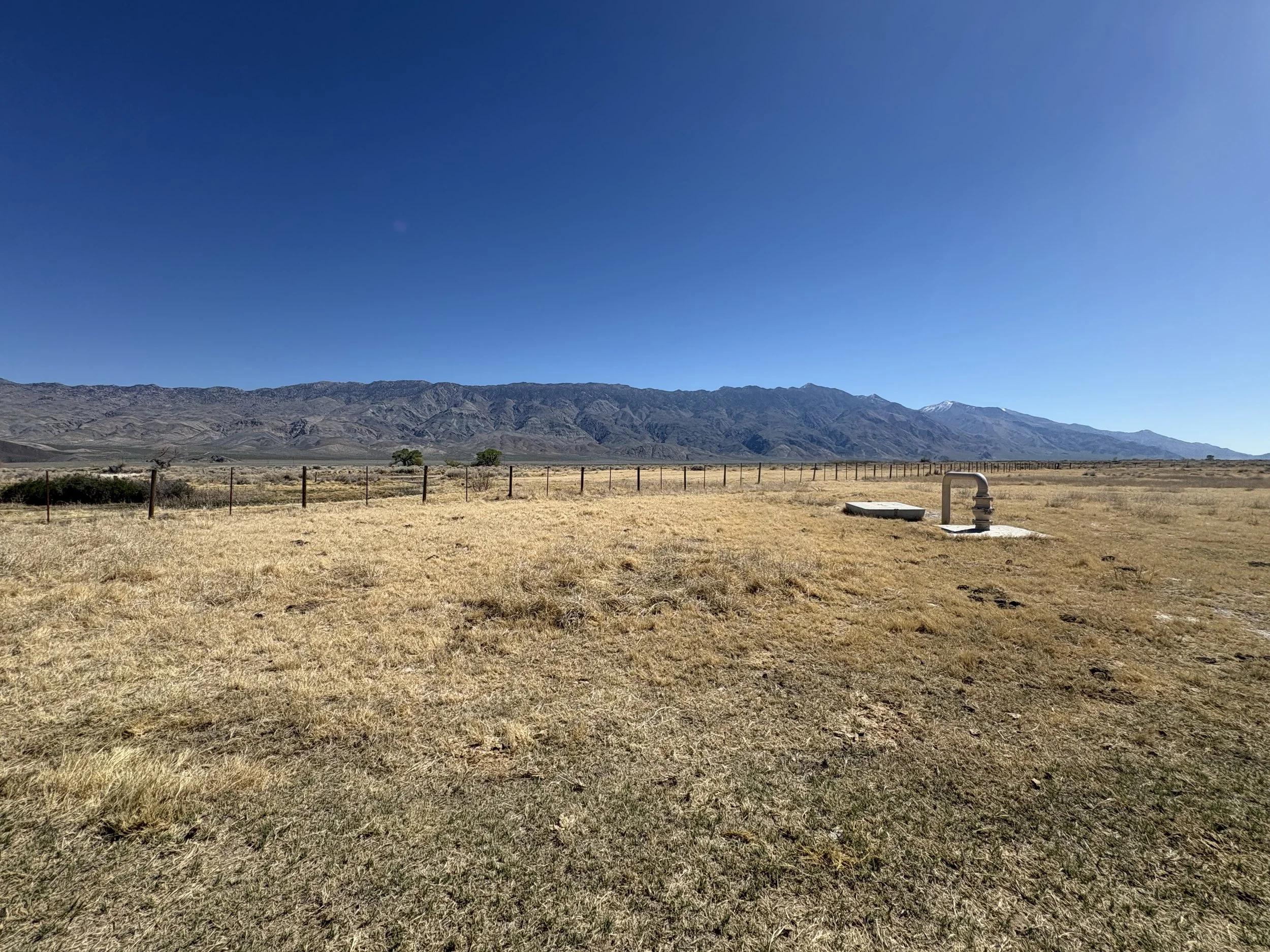
LADWP’s Groundwater Wells
LADWP pumps groundwater from production wells located throughout the valley between Laws and Lone Pine. The majority of these wells operate under on/off management, unless they are exempt or located within the Bishop Cone.
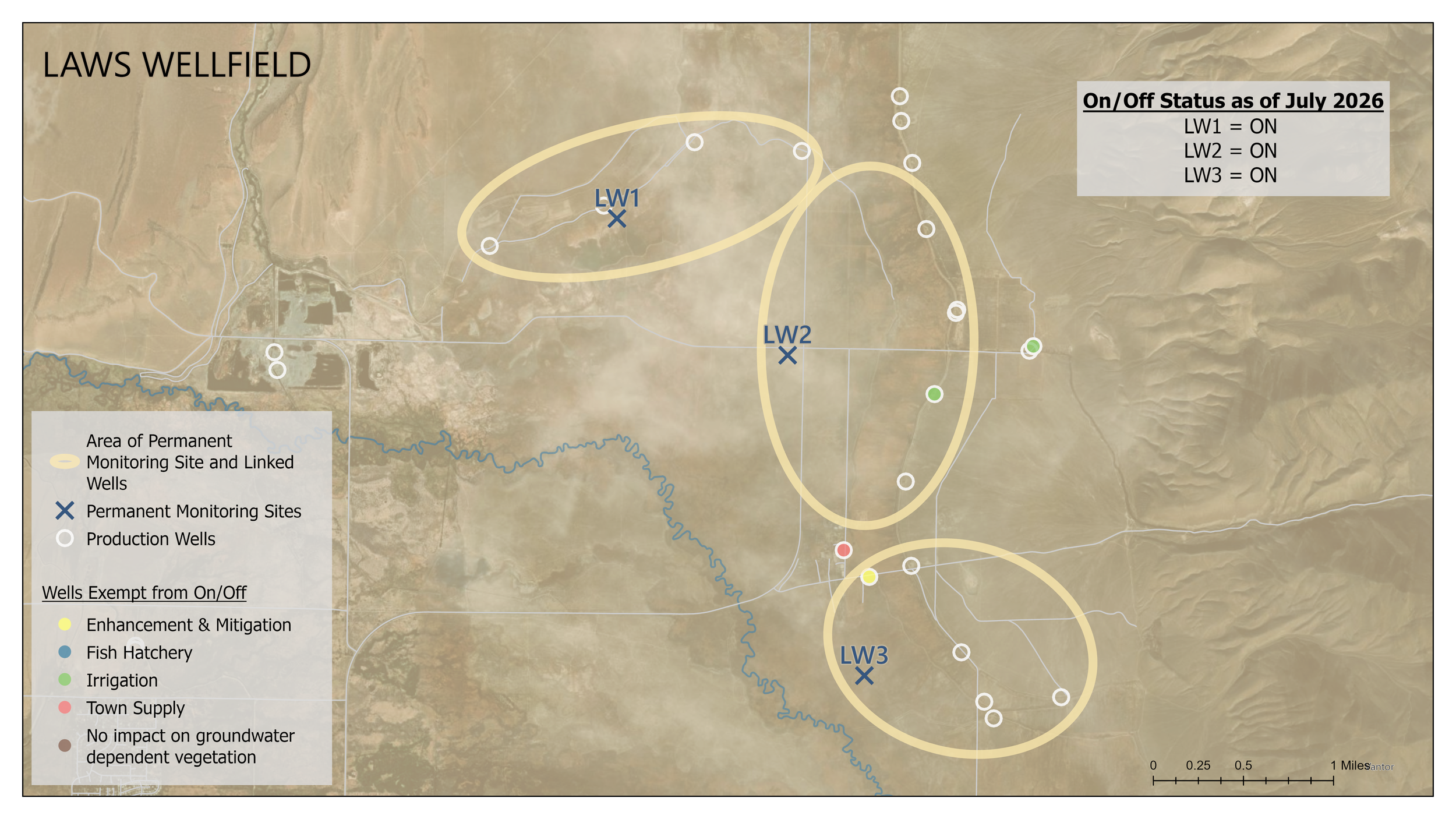
Permanent monitoring sites and linked wells in each wellfield (north to south)
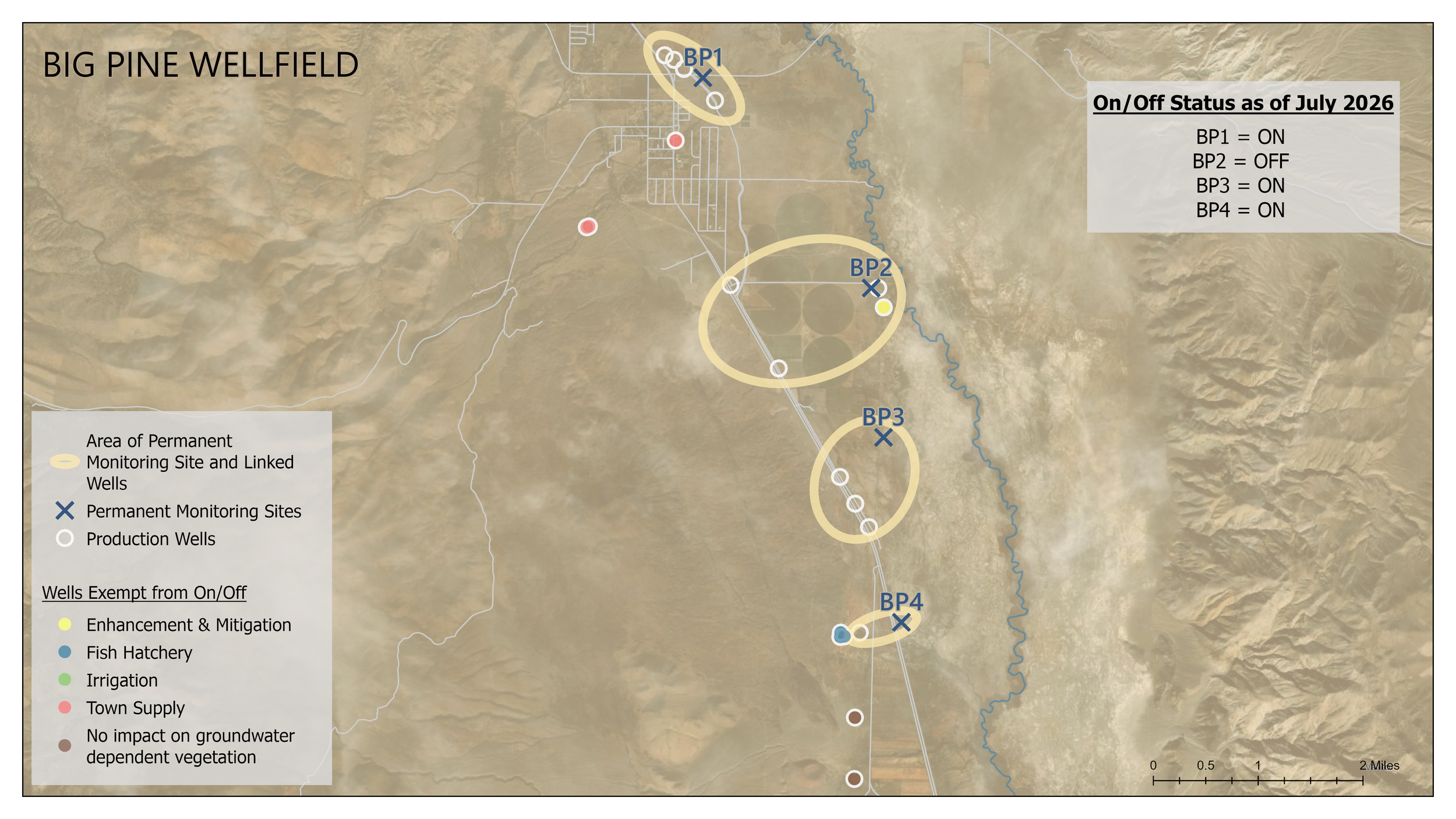
Permanent monitoring sites and linked wells in each wellfield (north to south)
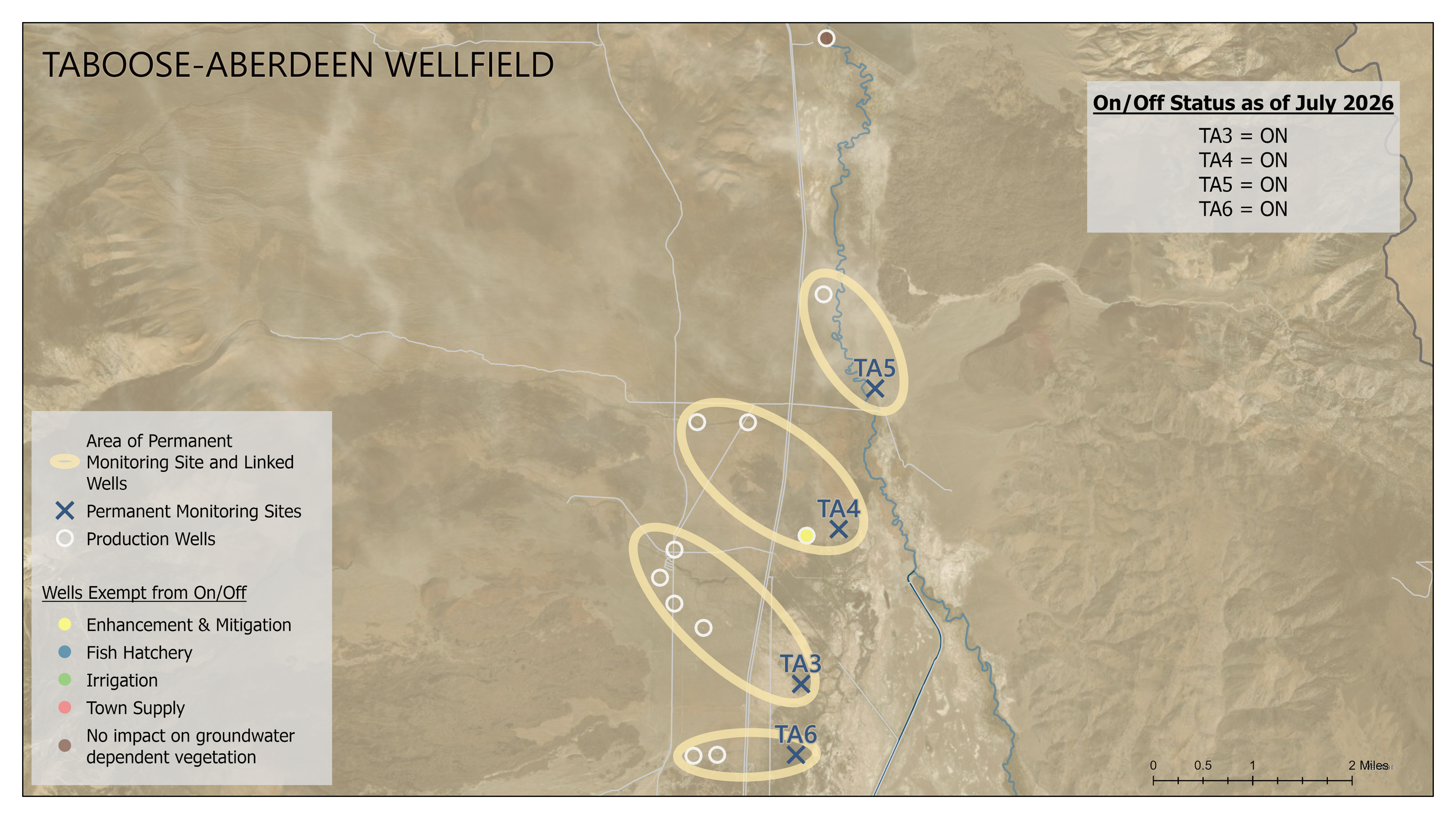
Permanent monitoring sites and linked wells in each wellfield (north to south)
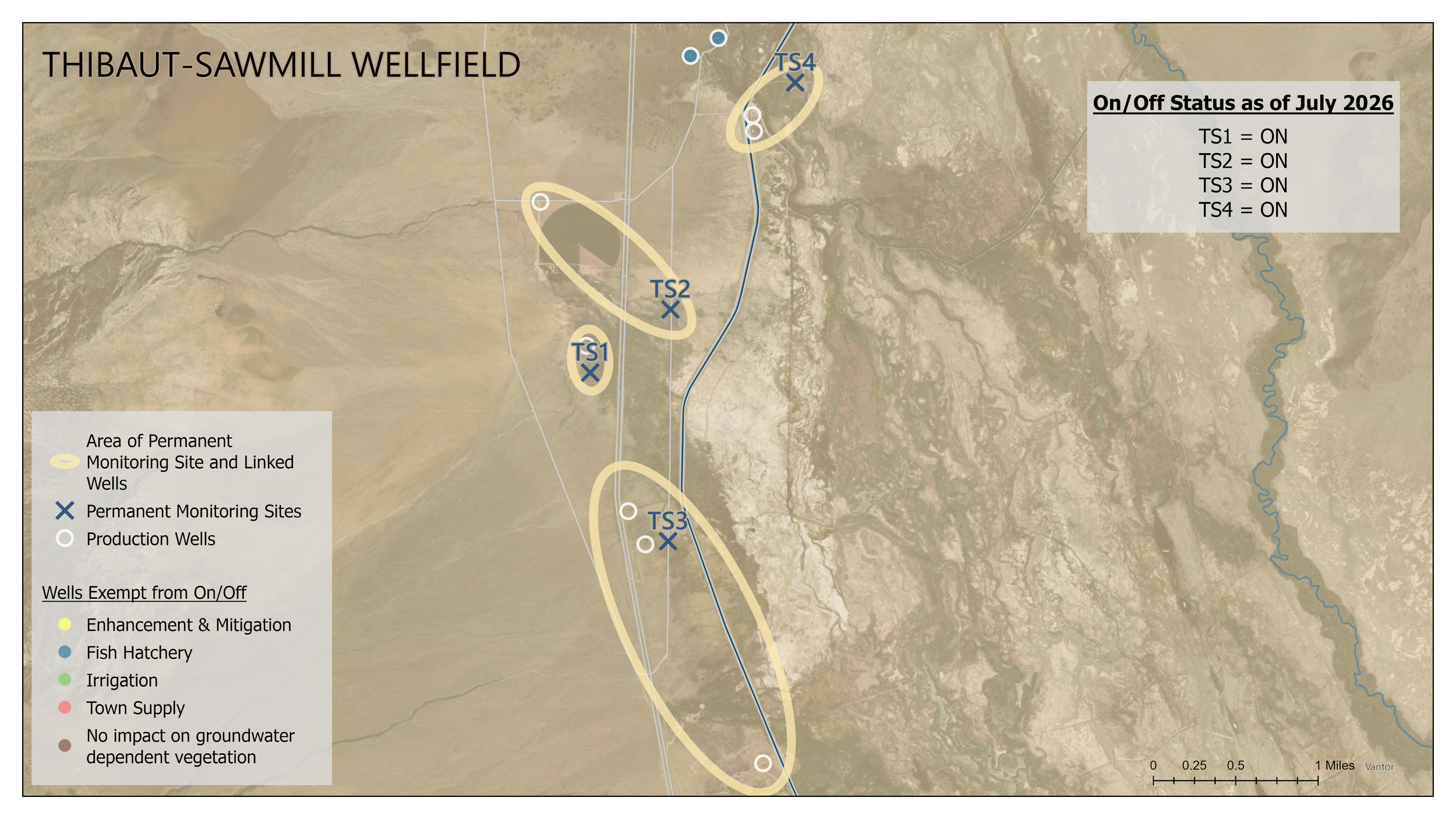
Permanent monitoring sites and linked wells in each wellfield (north to south)
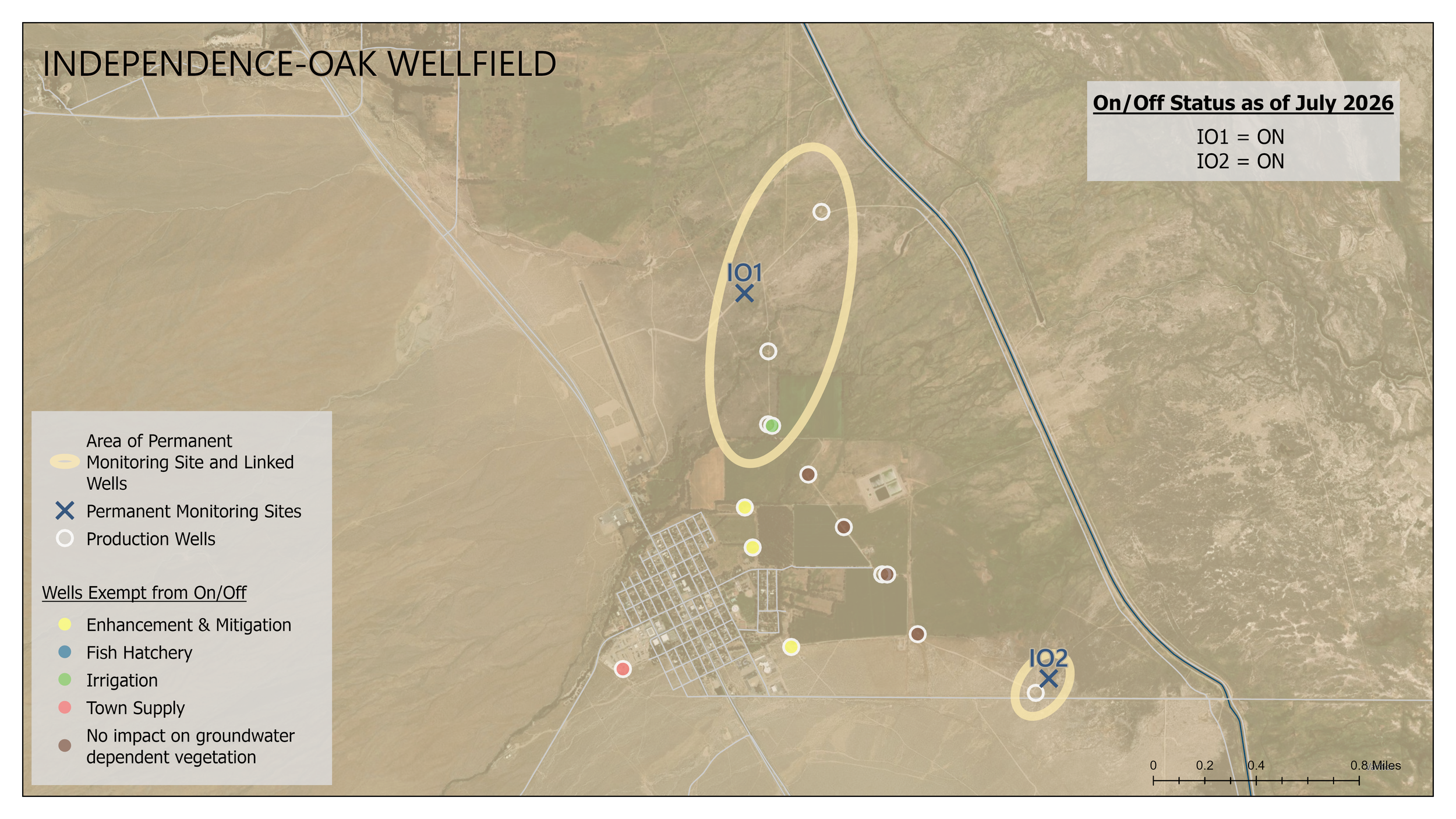
Permanent monitoring sites and linked wells in each wellfield (north to south)
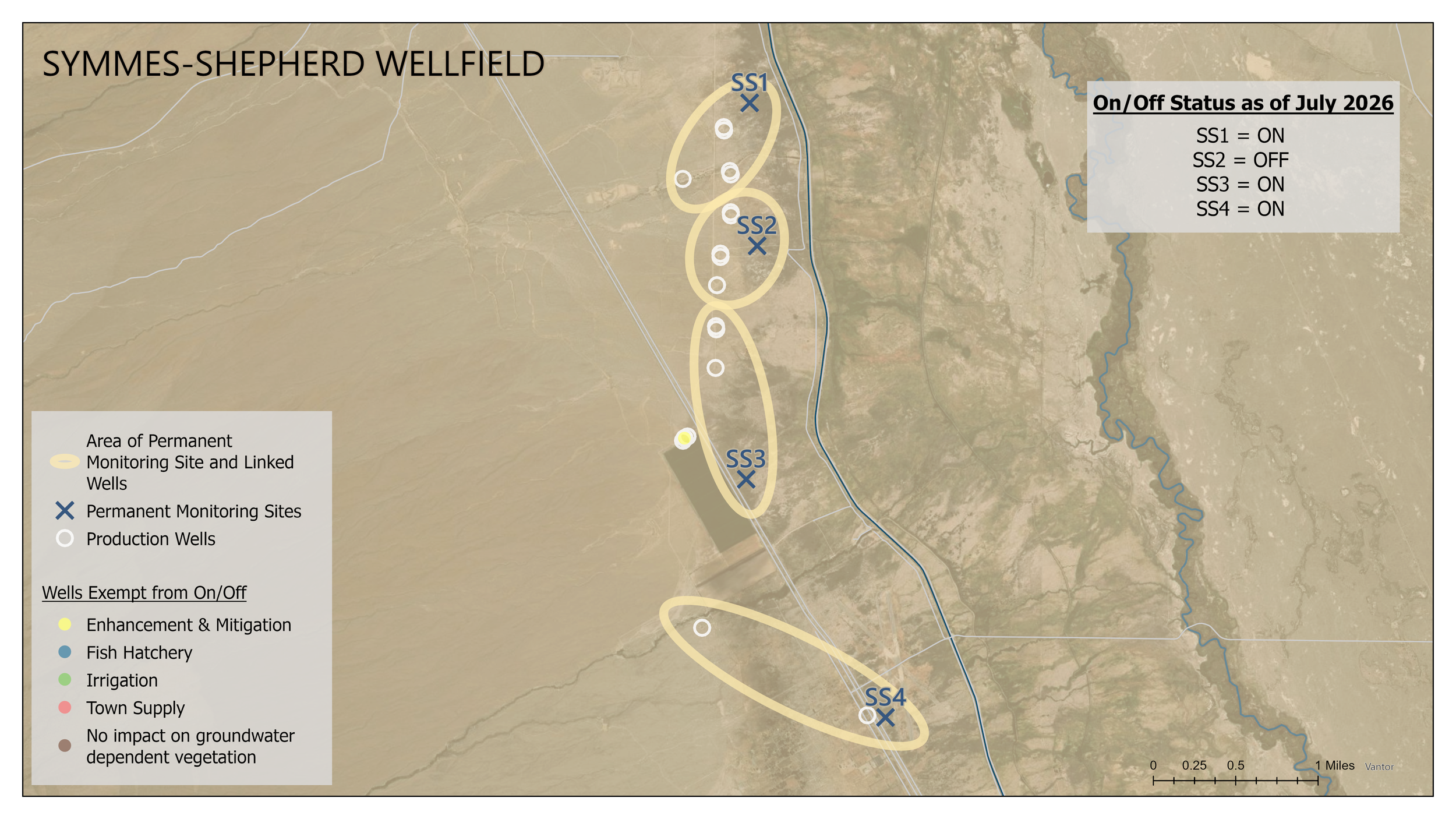
Permanent monitoring sites and linked wells in each wellfield (north to south)
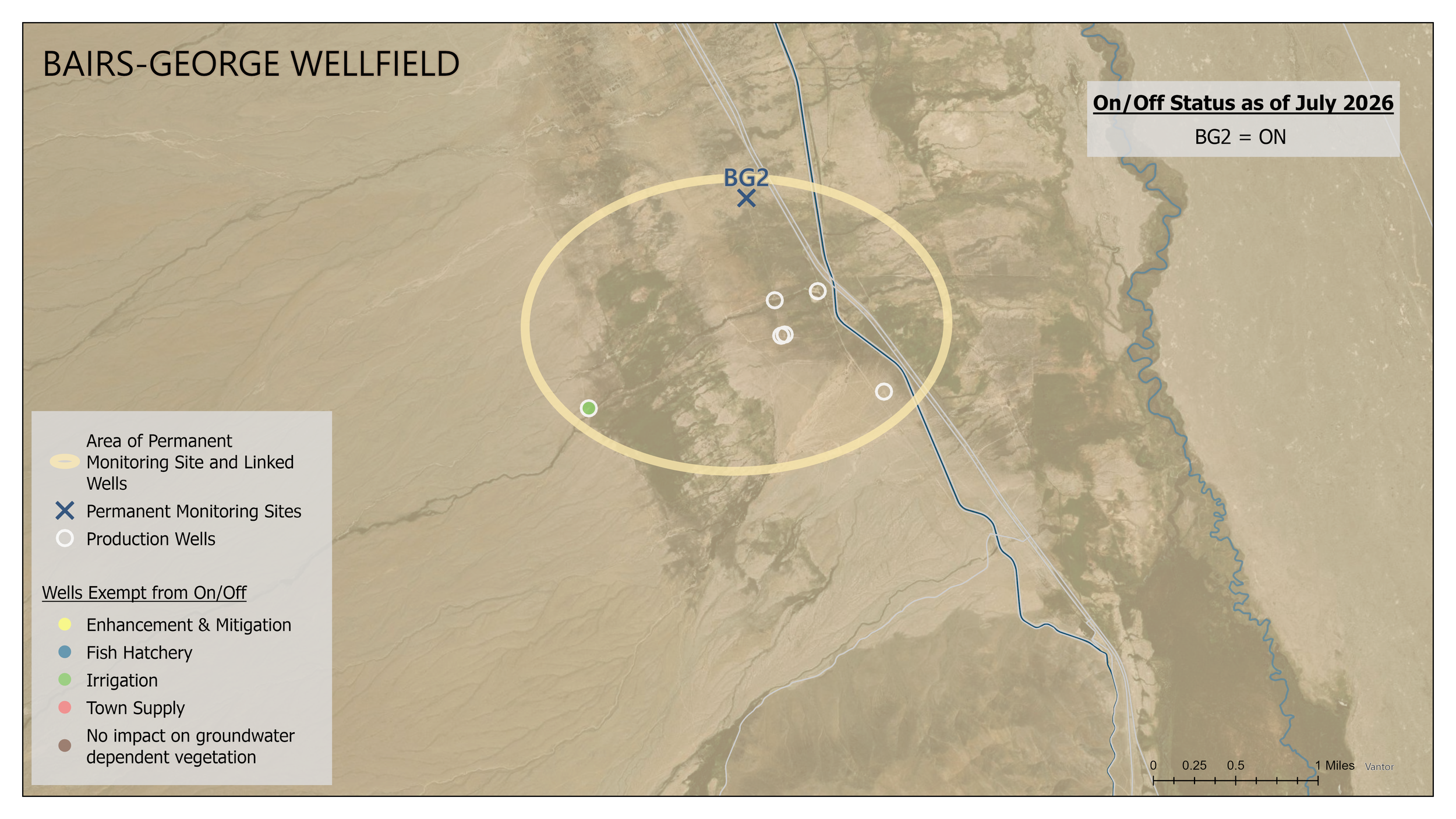
Permanent monitoring sites and linked wells in each wellfield (north to south)