History of Payahuunadü
time immemorial to 1862
Since time immemorial, the Nüümü (Paiute) and Newe (Shoshone) have lived in Payahuunadü, stewarding the land and water. To the north, the Kootzaduka’a have always lived near what is now called Mono Lake and Yosemite. The Nüümü developed agricultural practices that included the creation of irrigation ditches to spread water and grow native food species. This also provided a way for them to easily harvest fish from the streams. For millennia, the Nüümü and Newe lived by taking care of the waters of the valley until settlers and colonial ideas of ownership and management disrupted the Indigenous way of life.
When the water flowed freely, Payahuunadü had vast alkali meadows, a unique ecosystem supported by the naturally shallow groundwater table. Alkali meadow is a groundwater dependent ecosystem, meaning that it requires the water table to be at a level where plant roots can absorb water and thrive.
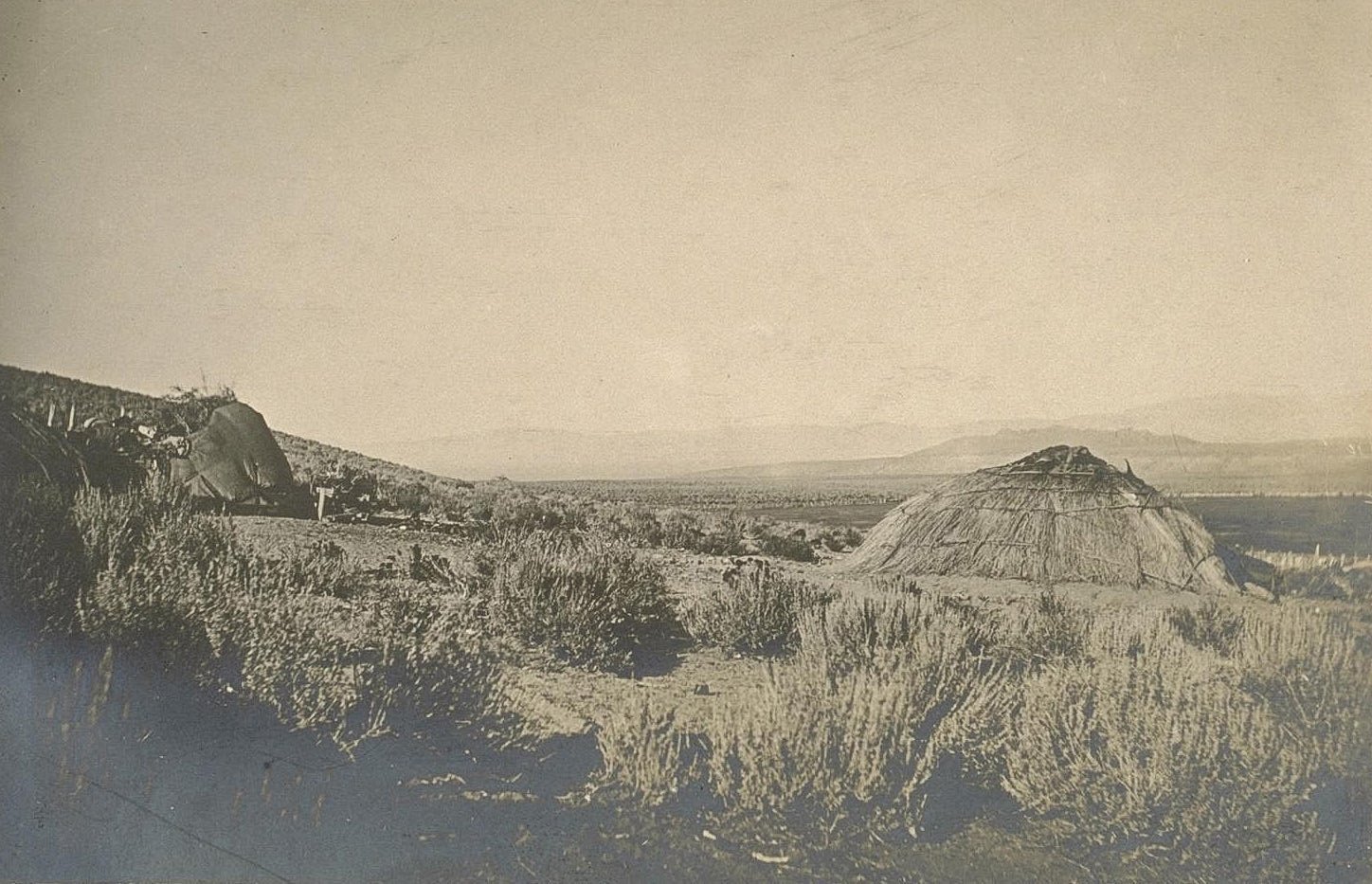
“The tribes really lived within a balance of life, but then they also learned how to spread the water because water turned into life and the more life or diverse life you had, the more opportunities for food and resources that you could also use. They learned: never take everything, always give a little bit of water back, always offer a little bit of food back. If you took everything, then in the long run you’d have nothing. That’s what modern society needs to learn today: if you exploit all the resources you will end up with nothing.”
-
Time immemorial
The Nüümü (Paiute) and Newe (Shoshone) have thrived in Payahuunadü since time immemorial. To the north, the Kootzaduka’a live near what is now called Mono Lake and Yosemite. The Indigenous people stewarded the land and water, including creating an irrigation system that spread water and grew native food species. Under Indigenous stewardship, the land was lush and plentiful, as noted by Captain Davidson in 1859, who said that the Paiute had made the desert “...bloom and blossom as the rose.”
-
1853
Payahuunadü is claimed as public domain under the 1851 California Land Act.
-
1855
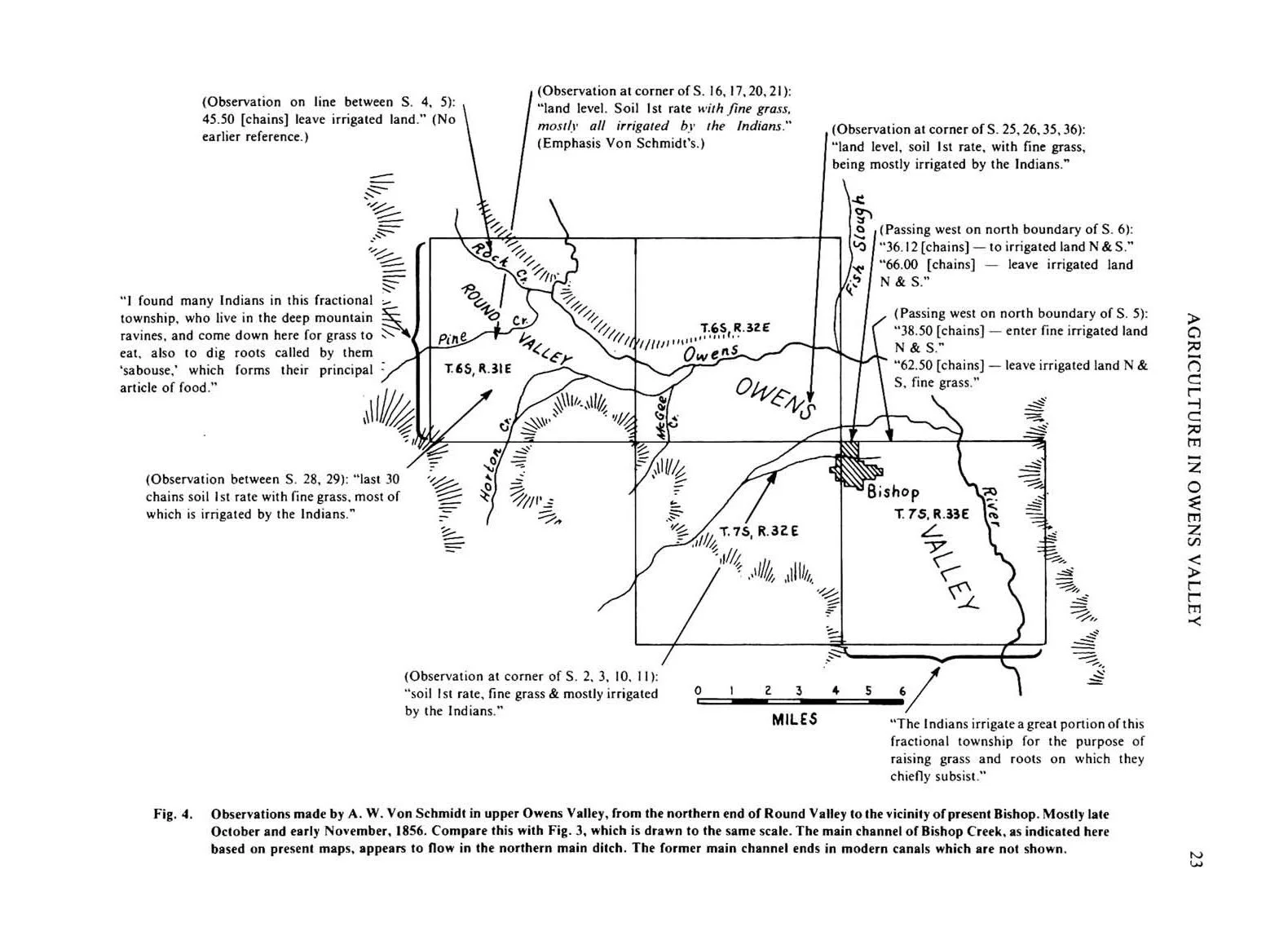
Surveys completed by Von Schmidt recognize and record Indigenous irrigation and agriculture in the valley. Learn More
1859
U.S. Army Captain John Davidson reports telling Paiute and Shoshone leaders that “their Country was set apart - exempt from settlement - for their use so long as they maintained honest and peaceful habits,” but no land is formally reserved.
1861
Amid the start of the Gold Rush, settlers begin to stream into Payahuunadü and federal agents abandon plans for a reservation. As settlers establish themselves and cultivate the land for agriculture and livestock, they co-opt the Indigenous irrigation systems that had been present in the valley.
1862
The Homestead Act is passed, allowing settlers to claim up to 160 acres of land. Violent conflicts begin to erupt between the Paiute and Shoshone and the settlers. The Paiute and Shoshone way of life, including their ability to access water and food, is interrupted by settlers, state and federal policy, and the establishment of the US Army at Fort Independence.
Federal and State Indian Policy provides important context for understanding issues affecting tribes in the Eastern Sierra. For more information on early policies that impacted Indigenous people during the beginning of California statehood, read “A History of American Indians in California: 1849-1879.”
To better understand how the federal government has approached Indian Policy over time, visit the “Federal Law and Indian Policy Overview” by the Bureau of Indian Affairs.
learn more
reflection
What is something new you learned about this water era?
Is there something you think is important about this time period that is not included in the timeline?