History of Payahuunadü
1972
Inyo County files suit against LADWP on the basis that increased groundwater pumping requires environmental analysis under the California Environmental Quality Act of 1970. This is the beginning of a period of various legal actions and negotiations between LADWP and Inyo County.
-
1976
An ecological study of Mono Lake is completed by UC Davis, alerting the community to potential for ecological collapse as a result of water diversions and decreased lake level.
-
1979
The Mono Lake Committee and the Audubon Society file a lawsuit against LADWP to protect Mono Lake, on the basis of violating the Public Trust Doctrine.
-
1982
Inyo County and LADWP agree to a Memorandum of Understanding (MOU) under which they will develop a groundwater management plan to settle litigation. This MOU authorizes studies by the U.S. Geological Survey on groundwater conditions and forms the Standing Committee and Technical Group.
1983
The California Supreme Court rules in favor of the Mono Lake Committee, in a precedent-setting case that determines the “public trust doctrine and the appropriative water rights system are parts of an integrated system of water law,” and thus public trust uses need to be balanced with uses of water rights. Learn more about the role of the Public Trust Doctrine and the precedent set in this case by visiting the Mono Lake Committee’s website.
1991
The Owens Valley Indian Water Commission is created. In the following years, Owens Valley Tribes will come to the table with the Department of the Interior (DOI) and LADWP to negotiate tribal water rights. When the Tribes reject the terms of a proposed settlement in 1997, the DOI withdraws its support from negotiations, leaving the water rights still unresolved.
For a more detailed account and timeline of the Owens Valley Indian Water Commission’s background and work since its founding, please visit their website.
The Inyo-LA Long Term Water Agreement is finalized and the corresponding Environmental Impact Report is certified, both of which include goals for managing groundwater pumping, well pumping provisions, the process for the annual operations plan, and mitigation projects which are intended to address the adverse impacts that occurred from LADWP groundwater pumping between 1970-1990. The agreement does not include input or consent from Tribes in Payahuunadü.
-
1994
The State Water Resources Control Board issues Decision 1631, which enforces the court’s decisions requiring permanent streamflow in Mono Lake tributaries and a lake elevation of 6,392 feet. To this day, Mono Lake has not been restored to the legally required lake level.
-
1997
A Memorandum of Understanding (MOU) is developed between Inyo County, LADWP, the Sierra Club, Owens Valley Committee, California Department of Fish and Wildlife, State Lands Commission, and Carla Scheidlinger. This MOU is intended to address the inadequacies of the Environmental Impact Report from 1991, particularly regarding the mitigation projects required to be completed by LADWP.
1998
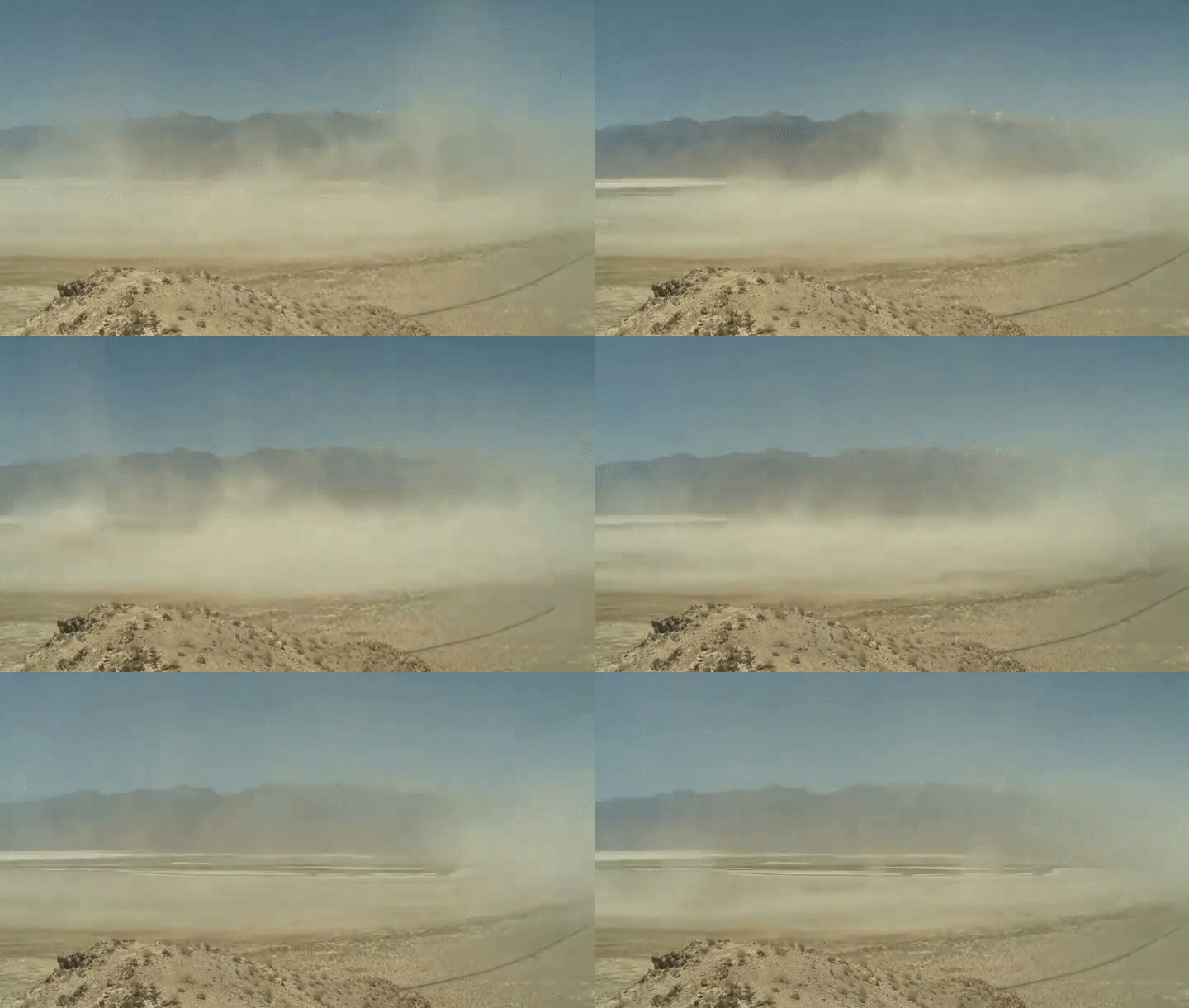
The Great Basin Unified Air Pollution Control District (GBUAPCD) and LADWP agree to develop a plan through which LADWP will undertake measures to control dust pollution from Owens Lake.
1998
The State Water Resources Control Board issues two decisions that require LADWP to restore streamflow in Mono Basin tributaries for habitat of fish and waterfowl.
1998
Inyo County adopts a groundwater ordinance that regulates exports of groundwater to entities outside of the groundwater basin or county. However, it does not regulate LADWP’s operations due to earlier court determinations made during litigation in the 1970s-80s.
2005-07
LADWP fails to begin implementation of the Lower Owens River Project mitigation on schedule, until court orders are issued, including one which imposes a $5,000 per day fee and restricts groundwater pumping.
Details on Decision 1631, including how LADWP’s Mono Basin exports are tied to lake elevation, can be found on the Mono Lake Committee’s website. The State of the Lake provides current information on the lake level.
REFLECTION
What is something new you learned about this water era?
Is there something you think is important about this time period that is not included in the timeline?