Basics of Water Management
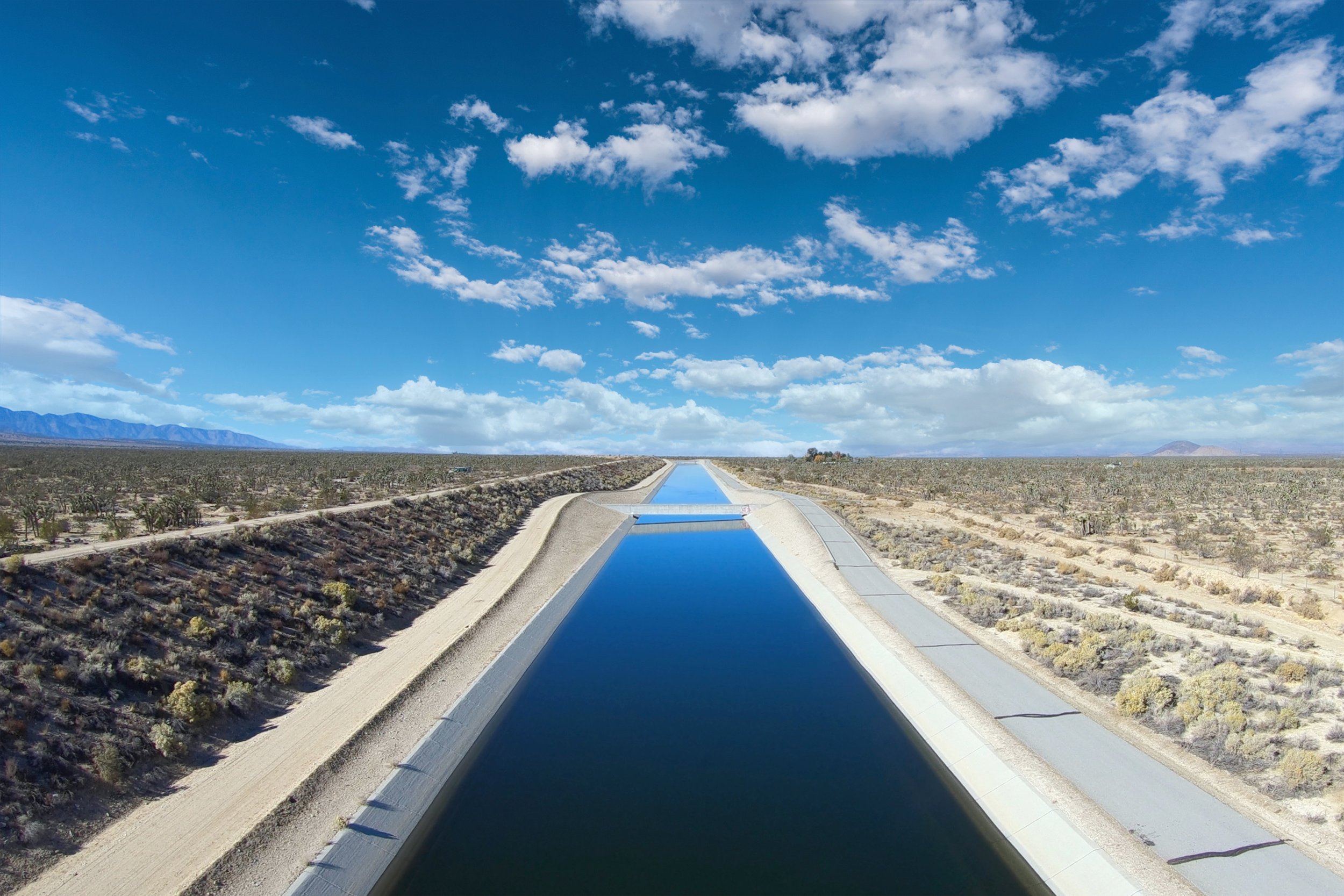
The Los Angeles Aqueduct System
The Los Angeles Aqueduct System is one of the major water supply systems for the City of Los Angeles, transporting surface and groundwater from the Mono and Owens Basins about 233 miles south to the city. Los Angeles began to secure rights to this water supply in 1905, when they began purchasing land in the Owens Valley. After decades of expanding their land and water rights, the Los Angeles Department of Water and Power (LADWP) now owns about 310,000 acres in the Eastern Sierra, including 250,000 acres in Inyo County and 60,000 acres in Mono County. The two barrels of the aqueduct have a combined capacity of 500,000 acre-feet per year or 780 cubic feet per second.
The Mono Basin
The northernmost part of the LA Aqueduct System is the Mono Basin, where surface water has been diverted from Lee Vining Creek, Walker Creek, Parker Creek, and Rush Creek. Whether and how much LADWP diverts from these creeks has changed over time as protections for the creek ecosystems and lake level have emerged through the advocacy of organizations like the Mono Lake Committee. Grant Lake Reservoir stores surface water and directs it to the West Portal, the entrance to the 11-mile Mono Craters Tunnel, which sends the flows into the Owens Basin, where they are diverted into the LA Aqueduct further downstream.
To learn more details about the LA Aqueduct infrastructure in the Mono Basin, check out these videos from the Mono Lake Committee:
The Owens Basin
The Mono Craters Tunnel emerges in the Owens Basin at the East Portal, where water extracted from the Mono Basin is released in the Owens River above Crowley Lake. Long Valley Dam was built in 1941, creating Crowley Lake as a reservoir to store the water exported from Mono Basin. From Crowley Lake, water travels down the Owens River Gorge, where three hydroelectric plants are owned and operated by LADWP. These are the Upper Gorge, Middle Gorge, and Control Gorge Power Plants. At the end of the Owens River Gorge, and just below its confluence with Lower Rock Creek, is the Pleasant Valley Reservoir. Pleasant Valley Reservoir provides both water storage and supports the operation of another hydroelectric power plant.
In the Owens Valley, surface and groundwater contribute to the LA Aqueduct. Groundwater production wells are owned and operated by LADWP from just north of Laws to the Lone Pine area. Some groundwater is utilized for in-valley uses, while some is put into the LA Aqueduct system for export.
South of Big Pine, Tinnemaha Reservoir provides water storage capacity. LADWP also owns and operates additional hydroelectric power plants in the valley, including the Big Pine, Division Creek, and Cottonwood Power Stations.
The LA Aqueduct Intake, which diverts nearly all of the Owens River into the Aqueduct, is located near Aberdeen, in between the towns of Big Pine and Independence. The Intake is the location of the LA Aqueduct headgates and is the start of the original 233 mile aqueduct completed in 1913. The First Aqueduct has a capacity of 480 cubic feet per second or 300,000 acre feet per year. To the north of the intake, surface water from tributary streams simply flows into the Owens River before being diverted at the intake. To the south of the intake, tributary streams flow directly into the aqueduct.
Because water is diverted from the Owens River, the last 62 miles of the river below the intake were dry for many years. Managed flows are now released into the river below the intake to fulfill the requirements of the Lower Owens River Project (LORP), a mitigation project intended to improve riparian habitat. At the end of the LORP, a pumpback station is operated by LADWP to pump surface water back into the Aqueduct after it has been used for the LORP. This means that water very rarely travels beyond the Pumpback Station to go into the Owens River Delta Area at the north end of Owens Lake.
North and South Haiwee Reservoirs provide water storage at the southern end of Owens Valley, as well as operational flexibility for LADWP. The Second Aqueduct, completed in 1970, begins at Haiwee Reservoir and adds an additional 300 cubic feet per second or 200,000 acre feet per year.
Other Hydroelectric Power
Bishop Creek
The Bishop Creek Hydroelectric Project is owned by Southern California Edison and operates on the Middle Fork of Bishop Creek. Five hydroelectric plants (Power Plants 2 through 6); water storage in South Lake, Lake Sabrina, and Longley Lake; and diversions from Green Creek, Birch Creek, and McGee Creek make up the infrastructure of the project.
references
“Town Water Systems Master Plan” Inyo County Public Works Department. Inyo-Mono Integrated Regional Water Management Program. January 2021
Big Pine CSD website - https://www.bigpinecsd.org/
City of Bishop website - https://cityofbishop.ca.gov/departments/public_works/water.php
LADWP website and publications
Mono Lake Committee
Inyo County Water Department